As violence against women once again dominates the national conversation, it can be easy to feel like the solutions sit somewhere else, with government, police, courts or specialist services.
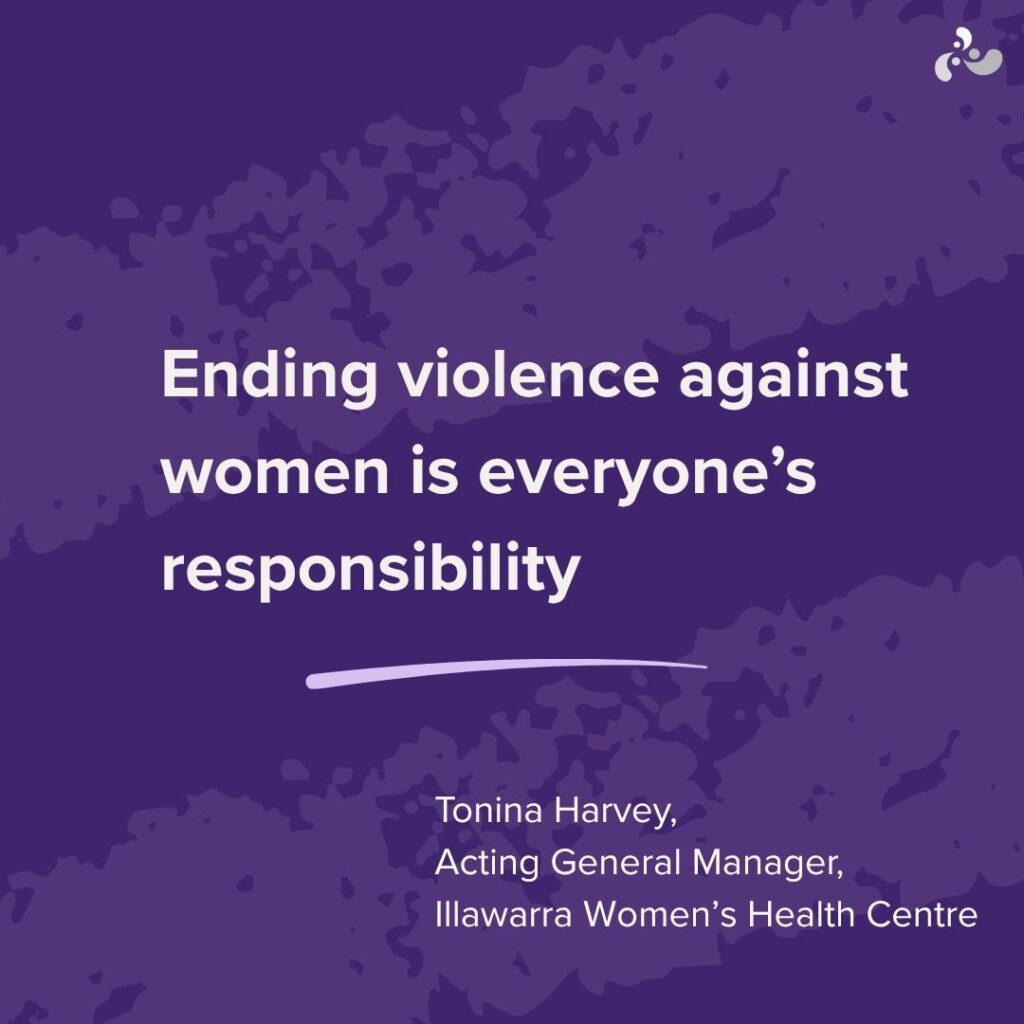
But Illawarra Women’s Health Centre Acting General Manager Tonina Harvey says some of the most important work happens much closer to home.
“Government has an absolutely critical role to play, and we need strong laws and properly funded specialist services,” Ms Harvey said.
“But preventing violence against women is also about what happens in our workplaces, our schools, our sporting clubs, our friendship groups and our families. We need to use every opportunity to open the conversation.
“We all have some influence over the culture around us.”
The need for that work is evident here in the Illawarra.
NSW Bureau of Crime Statistics and Research figures show recorded domestic violence-related assaults in the region have increased by an average 2.3 per cent a year over the past decade, while recorded sexual assaults have risen by an average 11.1 per cent a year.
The figures only capture incidents that come to the attention of police, with BOCSAR warning police data does not fully reflect the prevalence of domestic and family violence.
Changing that picture means looking beyond what happens after violence occurs and putting much greater focus on what can be done to prevent it in the first place.
It can be as simple as challenging a sexist comment rather than letting it pass, talking to young people about healthy relationships and consent, or questioning why women and girls are treated differently.
For leaders, there is an added responsibility to consider their organisation’s culture and whether people feel safe speaking up when something isn’t right.
“What we tolerate sends a message, but so does what we challenge,” Ms Harvey said.
“You don’t need to be an expert in domestic and family violence to contribute to change. We can all model respect, have conversations with our children and our peers, and be willing to speak up when we see attitudes or behaviour that concern us.”
The Centre is already putting that approach into practice through its Workplaces for Change program, which works with Illawarra organisations to prevent domestic, family and sexual violence and strengthen their response when an employee is experiencing it.
The program helps workplaces understand domestic and family violence, examine their own culture and policies, and give staff and leaders the confidence to respond appropriately.
“Work is such a big part of our lives, so workplaces can be incredibly powerful places for change,” Ms Harvey said.
“They can provide safety and support for someone experiencing violence, but they can also help create the kind of culture where equality and respect are expected.”
Schools and sporting clubs have similar opportunities, particularly because of the role they play in the lives of children and young people.
Ms Harvey said prevention was about giving all young people the foundations for healthy, respectful relationships and ensuring the adults and institutions around them modelled those values and responded effectively when violence occurs.
“Young people learn from what they see around them — at home, at school, in sport and in the wider community,” she said.
“We all have a role in helping them understand consent, equality and respect, and in showing them what healthy relationships look like.”
Ms Harvey said prevention must go hand-in-hand with properly funded specialist services for women who need support now.
“It can feel like such a huge problem that people wonder what they can possibly do about it,” Ms Harvey said.
“But culture is created by all of us, every day.
“The conversations we have, what we model for our children, what we expect in our workplaces and clubs and what we are prepared to challenge — that is where each of us can make a difference.”