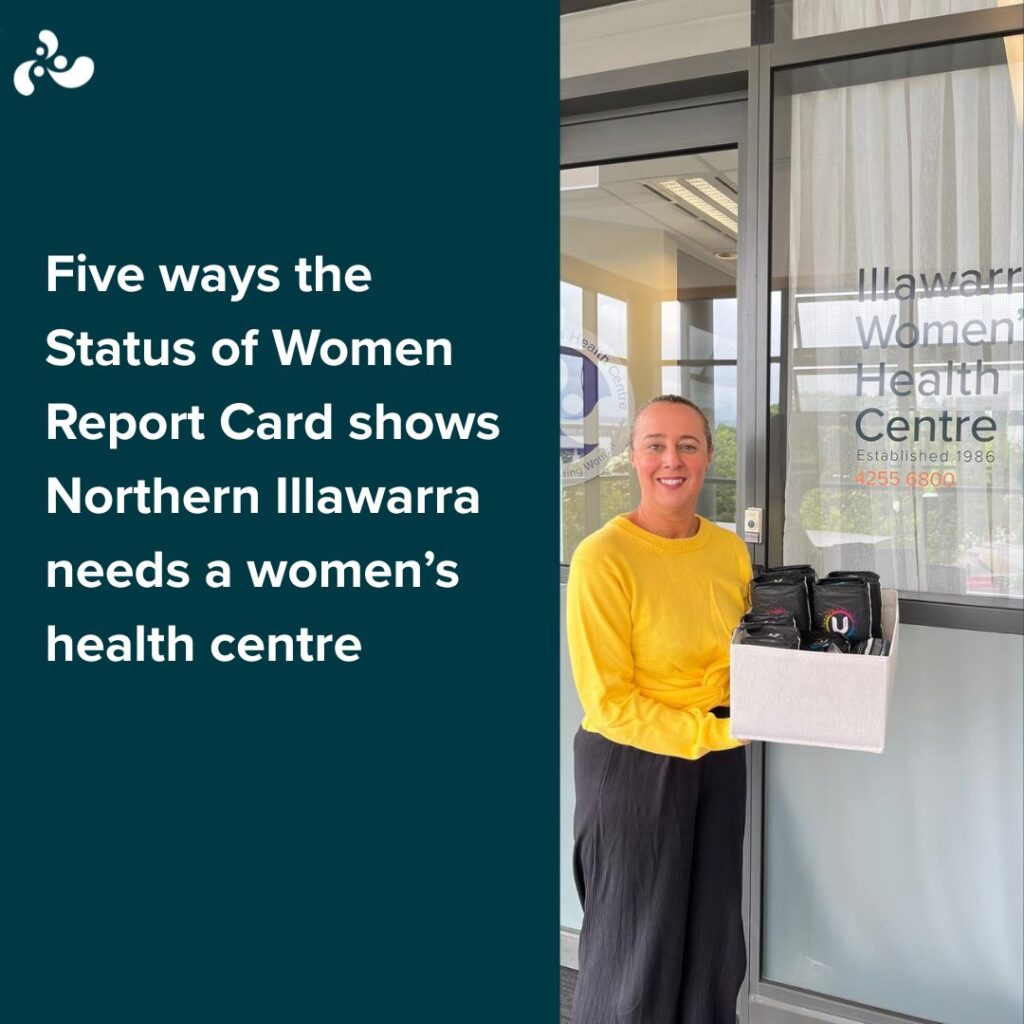
A new national report on the status of women in Australia is reinforcing what frontline services in the Illawarra have been warning: women use health services more than men, face persistent violence and economic pressure, and rely heavily on community services to stay well.
The latest Status of Women Report Card highlights the scale of the challenges women continue to face nationally and reinforces an urgent reality in the Illawarra – demand for counselling, domestic and family violence support and reproductive health care in the region has more than doubled in the past three years, leaving some women waiting up to 12 months for support.
The Illawarra Women’s Health Centre is urging the NSW Government to use the upcoming budget to fund a permanent Northern Illawarra women’s health service to ensure women can access specialist care close to home.
Here are five reasons the report card highlights why that investment matters.
1. Women rely on health services more than men
Women are using health services more than men. The report card shows women spent $373 million more than men on GP services in 2024–25 and filled 177 million PBS prescriptions compared with 150 million for men.
Illawarra Women’s Health Centre General Manager Jess Davidson said those numbers highlight the need for accessible, community-based women’s health services.
“Women already face higher health needs, but in the Illawarra many are waiting months for some services, to access the support they need,” Ms Davidson said.
2. Violence against women remains widespread
The report card shows that almost one in four women have experienced intimate partner violence since the age of 15, while one in five women have experienced sexual violence.
For many women, specialist services are the first safe place to seek help.
“When women are experiencing violence or trauma, delays in access to counselling or support can have devastating consequences,” Ms Davidson said.
“Women should not have to wait months for help or travel across the region to find it.”
3. Women are carrying the unpaid care burden
Despite record workforce participation, the report card shows women still shoulder most unpaid care responsibilities.
Ms Davidson said these pressures can make it harder for women to prioritise their own health.
“A local northern site would remove a major barrier to care for women balancing work, children and caring responsibilities,” she said.
4. Financial pressure is forcing women to rely on community health services
Economic inequality continues to affect women disproportionately. The report card shows women make up 55 per cent of social housing occupants. In comparison, single-women households account for around 52 per cent of those eligible for the maximum rate of Commonwealth Rent Assistance.
These pressures can make it harder for women to access private healthcare and increase reliance on front-line services.
“Cost-of-living pressures mean more women are turning to community-based health services, but without adequate funding those services cannot keep up with demand,” Ms Davidson said.
5. National improvements mean little without local access
National initiatives are expanding women’s healthcare, with more than 303,000 women accessing newly subsidised contraceptives and over 71,000 women using the new Medicare menopause health assessment since it was introduced in July 2025.
Ms Davidson said national policy improvements must be matched by investment in local services.
“Women are seeking care, but services on the ground are struggling to keep up with demand,” she said.
“Establishing a permanent Northern Illawarra women’s health service would mean fewer women reaching crisis point and more women getting the care they need, when they need it.”
The Illawarra Women’s Health Centre’s budget proposal to the NSW Government seeks funding to establish a permanent Northern Illawarra site offering bulk-billed women’s health services, expanded counselling and casework support, and dedicated bilingual staff to improve access for culturally and linguistically diverse communities. The service would also strengthen referral pathways for university students and other priority populations.
Ms Davidson said the Centre already has the workforce expertise, governance structures and partnerships in place to deliver expanded services quickly and effectively.