
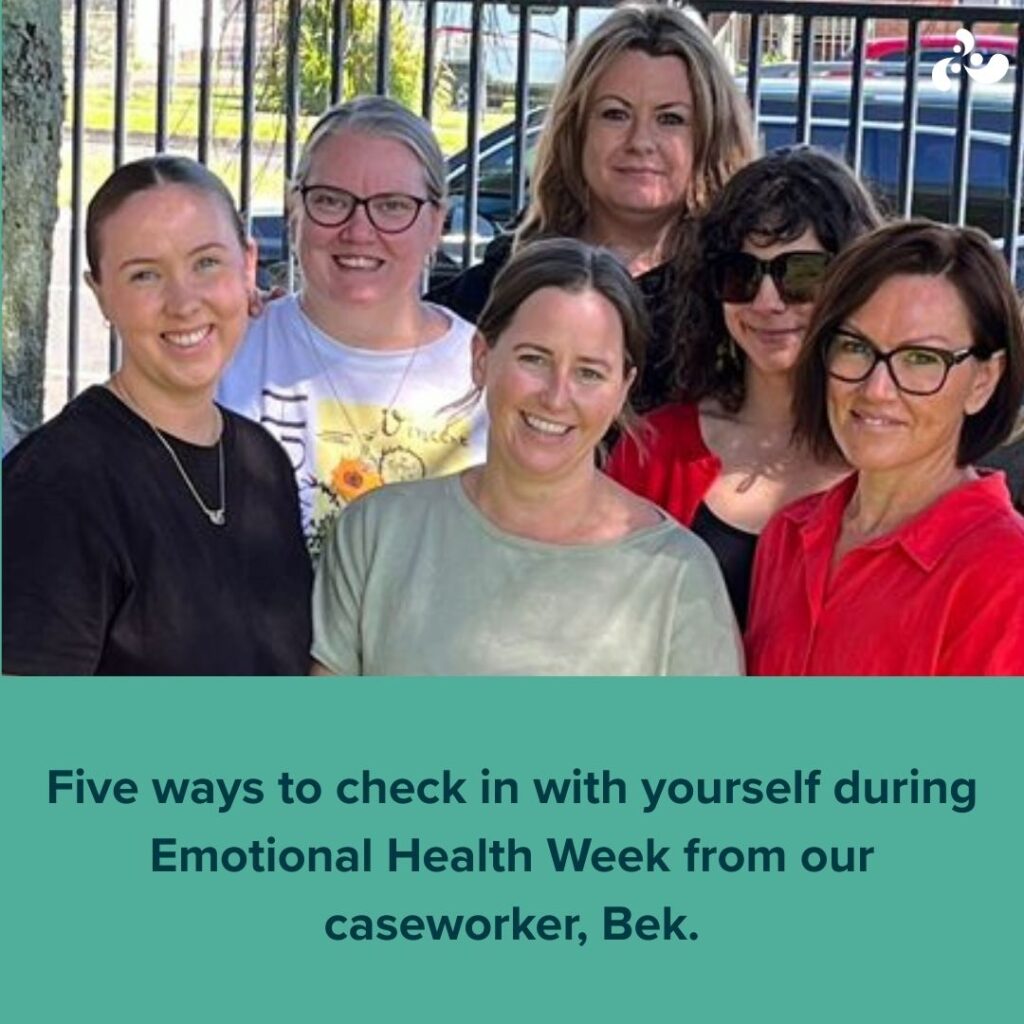
Illawarra residents are being encouraged to check in on their emotional well-being during Emotional Health Week, with local support services highlighting the importance of early awareness and everyday self-care.
Bek Bennett, a caseworker at the Illawarra Women’s Health Centre, said the week was a reminder to pause and reflect.
“It’s important for people to stop and think about what self-care looks like. How am I tracking? What changes can I make to support my own well-being, while we’re supporting other people?”
Ms Bennett said self-care is commonly misunderstood as indulgence, when it is often about practical limits and routine habits.
“Sometimes self-care is just saying no, putting limitations on the energy that you’re giving out, knowing when we need to stop and take a break,” she said.
“Sometimes it’s about finding out what fills your cup – and that’s different for everybody. For me, it’s starting my day with a run on the beach, playing with my dogs.”
Workers in caring professions are particularly vulnerable to burnout and vicarious trauma.
Ms Bennett said those pressures can be intensified by cost-of-living stress and limited time to recover between responsibilities.
“Quite often you are trying to give from an empty cup,” she said.
She said withdrawal and isolation are common warning signs that someone may be struggling, but early conversation can help prevent deterioration.
“Relief often comes from sharing what’s happening with someone you trust; it doesn’t have to be a professional,” she said.
The centre supports staff well-being through supervision, peer discussion, and community activities that balance difficult conversations with positive connections.
“Community and connection are vital to people’s and women’s well-being and emotional health,” Ms Bennett said.
“That’s something that we do so well here. Women who come to our centre and the centre’s staff form a community. People come here and feel safe. This is a refuge. That goes a long way in supporting people’s mental health.”
Five practical self-care tips
Ground yourself in the present: Notice your surroundings, breathe slowly, or write your thoughts down to calm your mind.
Set boundaries: Practice saying “no” or “not right now” to protect your energy.
Find what fills your cup: Nature, exercise, creativity, meditation. Choose what genuinely restores you.
Look after your body: Nutrition, sleep, and moderating caffeine or alcohol directly affect emotional health.
Talk to someone: A trusted person or helpline can ease distress and prevent isolation.